UL 2218 Class 4 shingles
Impact-rated architectural shingles, installed to the manufacturer's pattern, with the rating documented on the written scope.
If hail is the defining roof risk in San Antonio, Class 4 impact-resistant shingles are the direct answer to it. They are tested to UL 2218 for impact resistance, they are the shingle Texas law protects from HOA bans, and they are the upgrade path for a homeowner who has replaced shingles after hail more than once. The one question we will not answer with a number is the insurance discount, because it is set by your insurer, company by company, and no single percentage is verified.
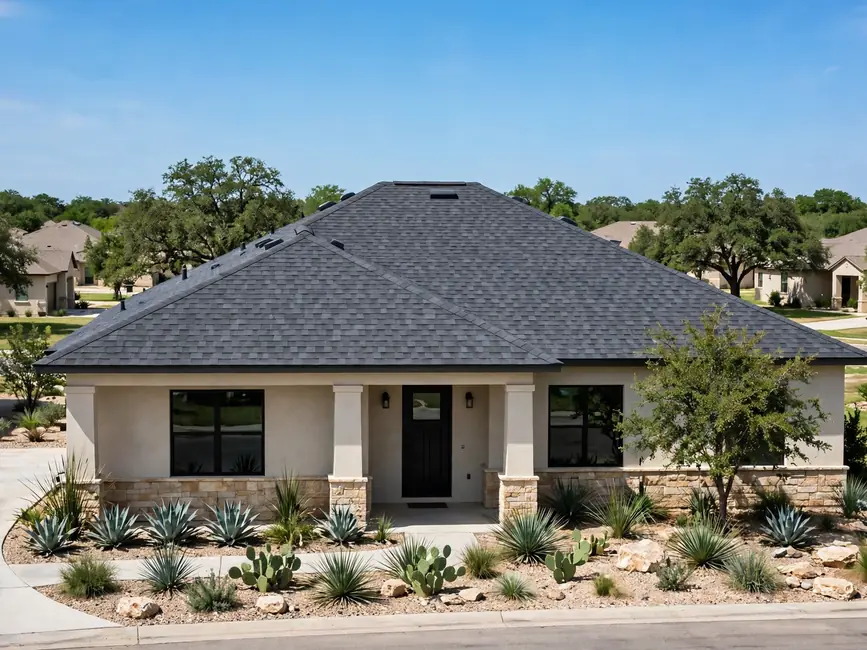
UL 2218 is the impact-resistance test for roofing. A Class 4 shingle is the highest rating in that test, struck by a steel ball dropped to simulate hail impact without cracking or breaking through. In San Antonio that matters: about 85 percent of Bexar County hail of one inch or more falls in March through May, and the 12 April 2016 storm brought 4.5-inch stones. A Class 4 shingle is built for that season. It does not make a roof hail-proof, and we do not claim that it does.
Two paper facts matter as much as the test. First, TDI Form 200 is the form that records an impact-resistant roof for insurance purposes, and your insurer will want it. Second, Texas Property Code section 202.011 protects shingles designed primarily to be wind- and hail-resistant from HOA bans, provided they resemble the shingles used in the subdivision, are more durable and of equal or superior quality, and match the aesthetics of surrounding properties. In practice that protects most Class 4 architectural shingles in a colour close to the approved palette. It does not cover a switch to a different material, such as shingles to metal panels.
A Class 4 roof is a full system install with an impact-rated surface. The items below are standard on our written scope.
Impact-rated architectural shingles, installed to the manufacturer's pattern, with the rating documented on the written scope.
The form that records an impact-resistant roof for insurance purposes, completed so your insurer has what it needs.
Old covering comes off down to the sheathing on a replacement. We inspect every sheet and replace what is soft before anything new goes down.
Step flashing at walls, pipe boots at penetrations and new drip edge around the perimeter of a Class 4 install. Old flashing is where most leaks start, so we do not reuse it.
A ridge vent sized to the roof area paired with soffit intake, so the attic does not cook the shingles from underneath.
We help you get HOA approval in writing, naming the exact product and colour, and we explain the section 202.011 protection where it applies.
We walk the roof, read the hail history on your slopes and give you an honest repair-versus-replace read, with the Class 4 option priced alongside standard shingles.
Class 4 options are set out on the written scope, with the UL 2218 rating and the colour choices that match your HOA palette.
We help you get HOA approval in writing, naming the exact product and colour, before work starts, and explain the section 202.011 protection.
Full tear-off, deck repair, underlayment and valley membrane, new flashing throughout, and the Class 4 shingles installed to the manufacturer's pattern.
TDI Form 200 is completed for your insurer, and we walk the finished roof with you, showing the flashing details.
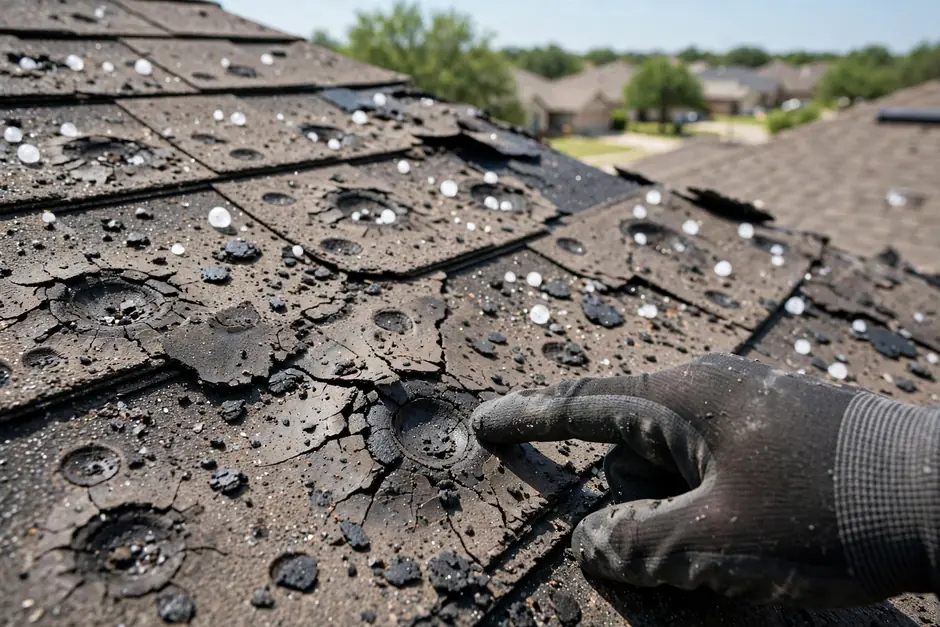
We walk the roof, read the hail history on your slopes and give you an honest repair-versus-replace read, with the Class 4 option priced alongside standard shingles.
Drives fasteners to the specified depth and pattern on Class 4 shingles, with placement hand-checked on every course — over-driven nails tear shingles, including impact-resistant ones.
Cuts valleys, hips and rake edges cleanly on a Class 4 install. The details are hand-cut, and that is what separates a finished roof from a rushed one — a cut Class 4 shingle still has to seal.
On a Class 4 roof the meter reads wet decking and hidden leaks from the attic side, so soft sheets come out before they are roofed over.
Snaps straight reference lines for shingle courses. Straight courses are not cosmetic; they are how you know the roof is laid to spec.
Harnesses and tie-offs on every pitch, Class 4 jobs included. Nobody goes up without fall protection, and no ladder goes on a slope it cannot sit safely on — Class 4 shingles are no different underfoot.
The install is photographed, including the rating labels and the finished slopes, so your insurer has a record of what was installed.
A home that has replaced standard shingles after hail more than once often wants the next roof to stand up better to the next storm.
What we do: an honest read on Class 4, including that the discount is set by the insurer, then a full install with impact-rated shingles and TDI Form 200 completed.
Book this service →After a hailstorm, some homeowners choose a roof that dents less and lasts longer through the next spring season.
What we do: full tear-off, deck repair, and a Class 4 install with new flashing throughout, with HOA approval in writing naming the exact product and colour.
Book this service →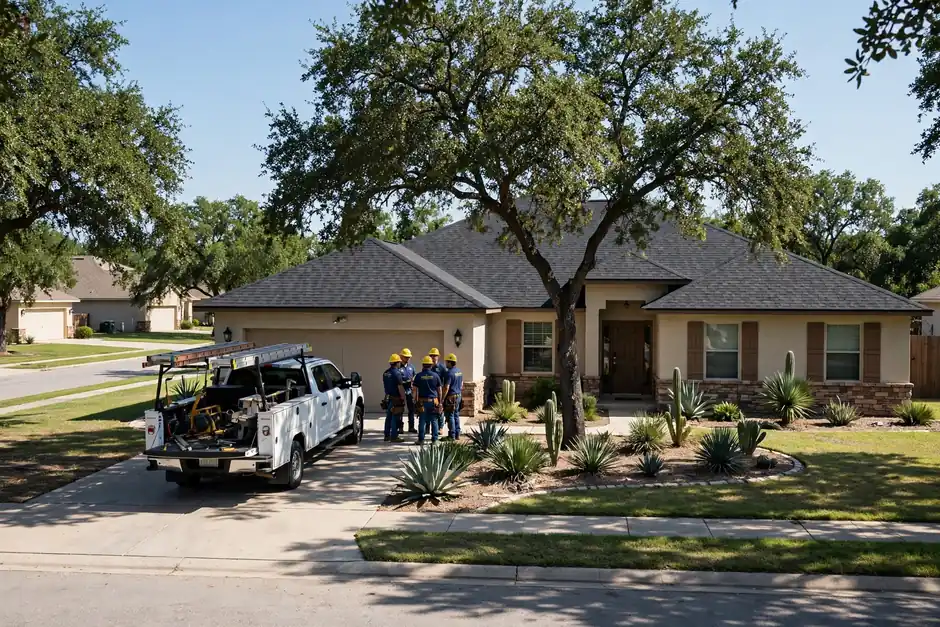
A home on its third roof may choose impact-rated shingles after two standard roofs were bruised by hail.
What we do: a complete architectural shingle rebuild with impact-rated shingles, ridge ventilation and new flashing, and the Form 200 record for the insurer.
Book this service →Most Class 4 failures in San Antonio announce themselves long before the ceiling stains: bruised mats that never leaked, granule loss after a spring storm, a ridge cap lifted by wind. These are the impact-resistant shingle issues we see most, and what they turn into when they are ignored.
Ask a pro →Class 4 shingles are tested to UL 2218 for impact resistance. We explain what the rating does and does not promise, and we do not call any roof hail-proof.
We quote no discount percentage, because the discount is set by your insurer, company by company. A roofer who quotes one is quoting someone else's number.
Section 202.011 protects hail-resistant shingles from HOA bans when they resemble the subdivision's shingles and match the area's look. We help you use that protection properly.
The shingle is only part of the system. We fit new flashing, boots and drip edge throughout, because old flashing is where the next leak starts.
“Found their ad on marketplace, super quick feed back. Gentlemen stopped by same day to inspect roof. This company is extremely professional and quick. They had our roof done in 2 days. Great price point and easy to work with. Thank you Juarez Contracting.”
Alethia VelazquezGoogle review
“Chris was professional, on time for the estimate, very informative about what needed to be done,and willing to work with me. Thank you for a job well done.”
Belinda SalinasGoogle review
“Very fast estimate and fixed within 24 hours of asking them for help. Very fast and very reliable. My roof looks great!”
Jamie KGoogle review
A shingle rated Class 4 under UL 2218, the impact-resistance test for roofing. It is the highest rating in that test, struck by a steel ball dropped to simulate hail impact without cracking or breaking through.
We do not quote a percentage. The discount is set by your insurer, company by company, and no single percentage is verified. A 1998 Texas Department of Insurance bulletin set mandatory credits, but the current position is company-by-company. Ask your insurer what it offers for a UL 2218 Class 4 roof with TDI Form 200.
Usually not, if they resemble the shingles used in the subdivision, are more durable and of equal or superior quality, and match the aesthetics of surrounding properties. Texas Property Code section 202.011 protects shingles designed primarily to be wind- and hail-resistant. It does not cover a switch to a different material.
The form that records an impact-resistant roof for insurance purposes. Your insurer will want it to apply any Class 4 consideration, and we complete it as part of the install.
Call (254) 329-0299 during business hours for a Class 4 inspection with a written scope and the discount question answered straight.
Call (254) 329-0299 →Call us at (254) 329-0299 or send an email. We answer the phone during business hours and return after-hours messages first thing the next business morning. Class 4 inspections are by appointment.