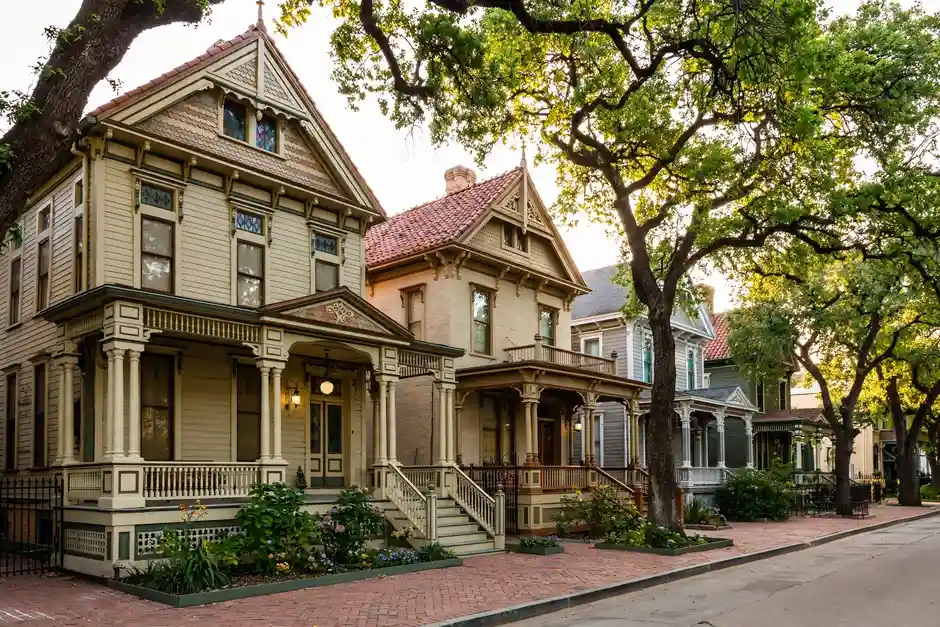
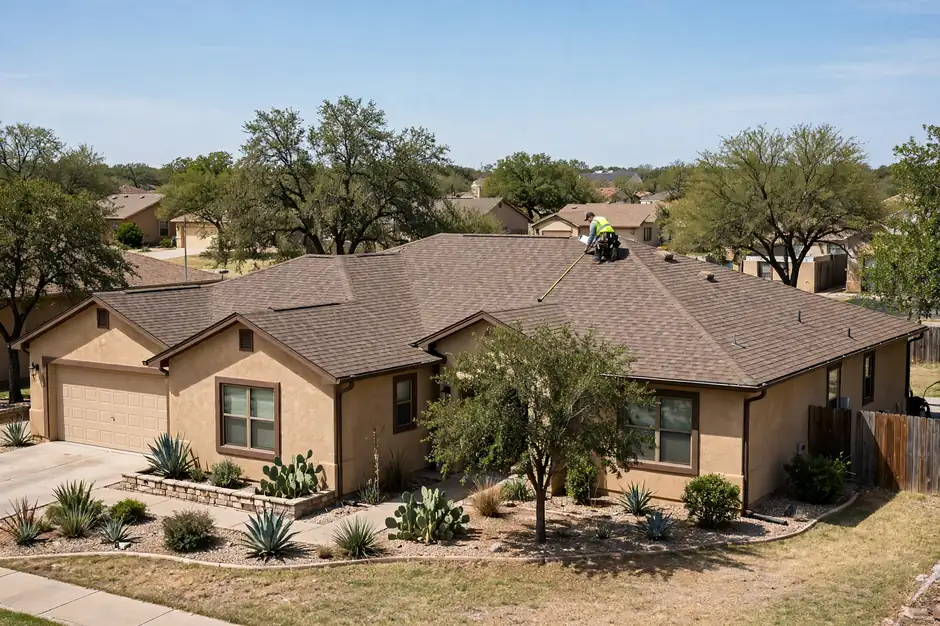
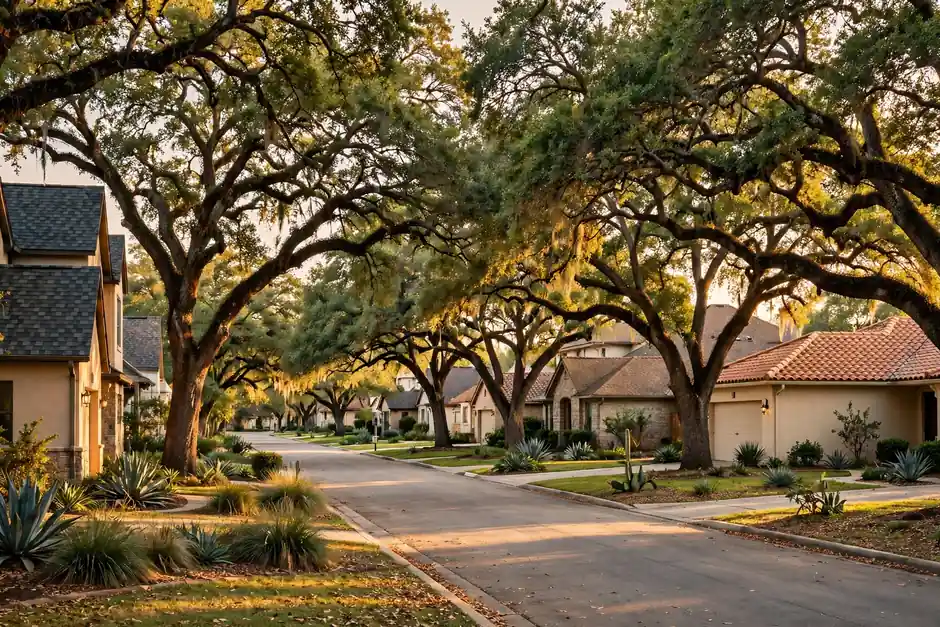
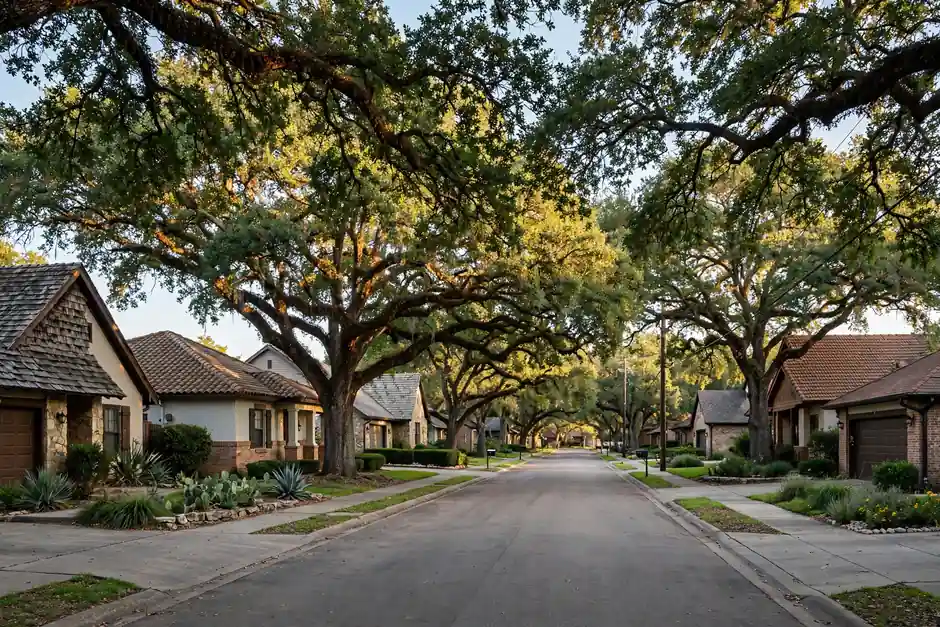
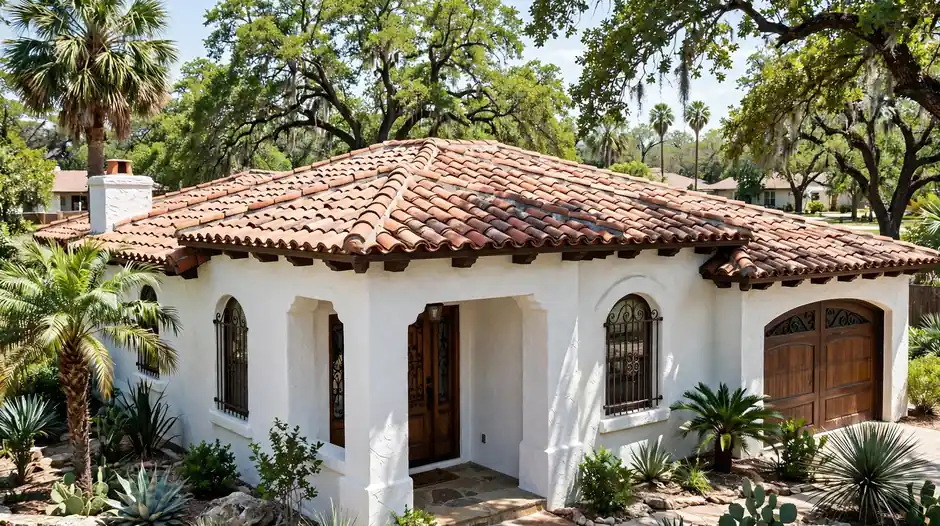
Beacon Hill grew as a streetcar suburb on the near north side, and its housing stock still shows it: modest bungalows and four-squares from the 1910s through the 1940s, with postwar infill between them, in the 78201 and 78212 area. These are the houses the city’s middle ring was built from — simple gable and hip roofs, wood-frame construction, and pier-and-beam foundations, the standard before slab-on-grade took over around 1960. A bungalow roof is a modest roof: the pitch is gentle, the field is small, and the failure modes are the ones age brings — brittle shingles that no longer seal, flashing that has been patched more than once, and valleys that have collected decades of debris. Many of these houses are now on their second or third roof, and the houses themselves are among the most affordable detached homes inside Loop 410. The work here is not about premium materials or review boards. It is about a sound roof at a fair scope, done properly, on a house that has already lasted a century.
Explore Beacon Hill services →
Beacon Hill’s age is also its roofing advantage: the houses are simple, the roofs are accessible, and a repair that is done right will hold. The risks are the ordinary San Antonio ones. Hail season runs March through May — Bexar County logged 363 reports of hail one inch or larger between 1996 and mid-2026, about 85 percent of them in those three months — and the 12 April 2016 storm put two-to-three-inch hail just north of downtown. Heat is the slower risk: architectural shingles in San Antonio realistically last 15 to 20 years, and on a bungalow the south and west slopes age first. And the winter freeze is a different kind of roof call here: after Winter Storm Uri in February 2021, the commonest “ roof leak” was a burst supply line in an unconditioned attic, with water appearing on the thaw and no rain at all. On a pier-and-beam bungalow with pipes in the attic, that distinction — plumbing, not roofing — is the first thing an inspection has to make.
Juarez contracting & innovation LLC