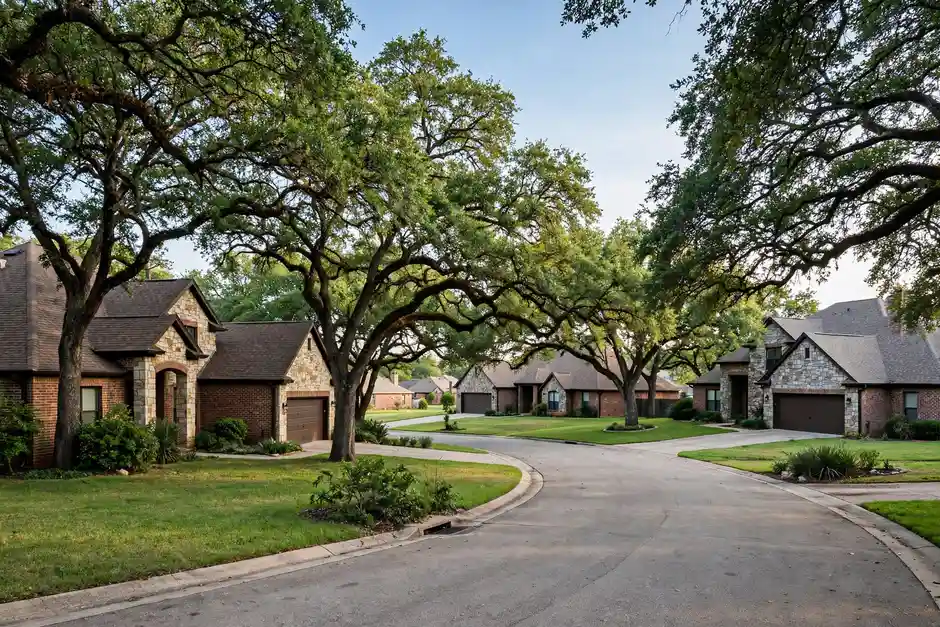
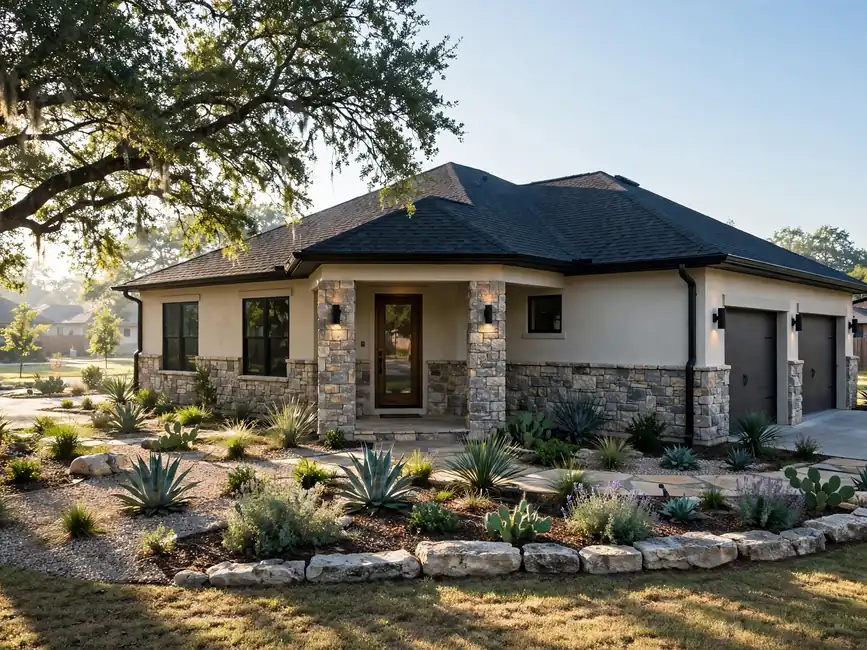
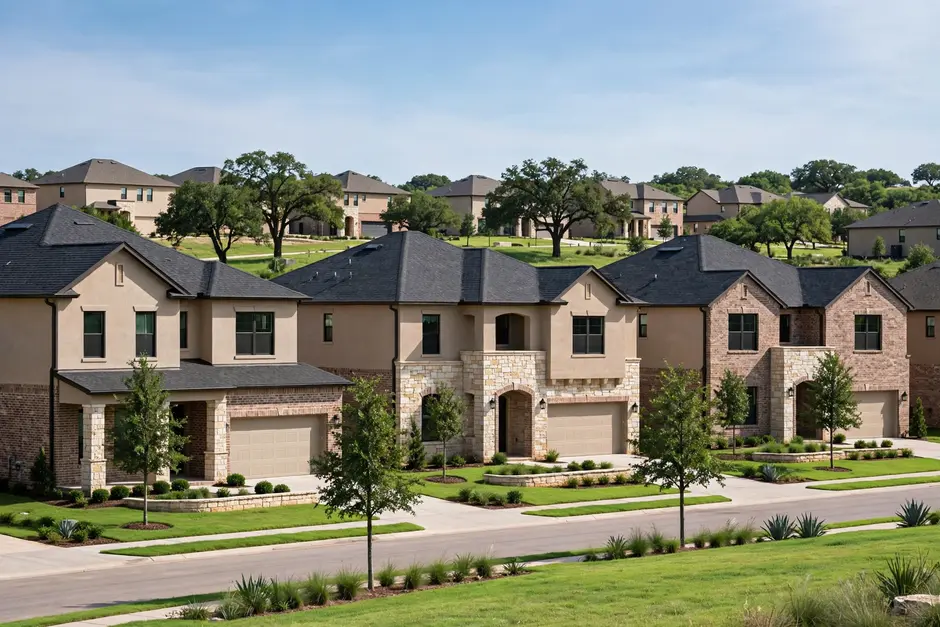
Stone Oak’s housing stock is young by San Antonio standards — the citywide median year built is 1985, while Stone Oak’s median build sits around 2000 — and that youth is exactly what sets the work here. A subdivision built in one wave reaches replacement age in one wave: 1990s architectural shingles are now on their second roof in many streets, and tile roofs installed in the same era are coming up on the 20 to 30 year underlayment limit even though the tiles themselves can last 50 years or more. The dominant materials are architectural asphalt shingle and clay or concrete tile, with tile common on Mediterranean and Spanish-style homes, and most subdivisions run an HOA architectural review committee that expects material and colour approval before work starts. We plan every Stone Oak job around those three facts — age, material, and HOA sign-off — before a single shingle is ordered.
Explore Stone Oak services →
Sonterra folds into this page’s coverage: the far-north subdivisions along the US-281 and Loop 1604 corridor — Sonterra, Canyon Springs, Encino Park — share the same 1990s-onward build pattern, the same tile-and-shingle mix, and the same HOA review step. Hail is the other shared fact. Bexar County logged 363 reports of hail one inch or larger between 1996 and mid-2026, about 85 percent of them in March through May, and the 12 April 2016 storm that dropped 4.5-inch stones north of downtown caused around $1.36 billion in damage. A Stone Oak inspection after a spring storm documents what the hail actually did to each slope, so the repair matches the damage instead of the rumour.
Juarez contracting & innovation LLC