Attic-side tracing
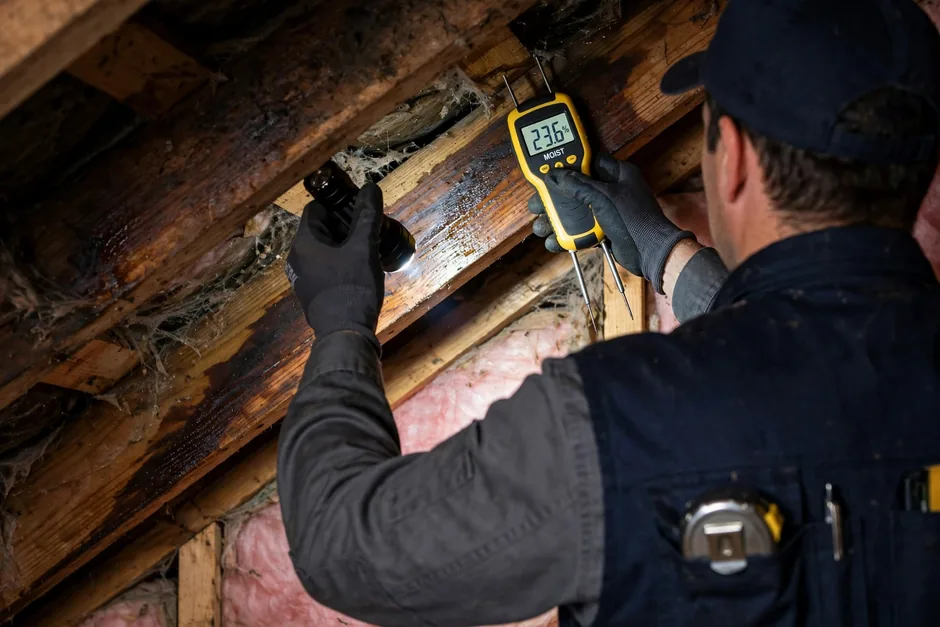
A moisture meter reading from the attic side finds the entry point and how far the water travelled, turning a guess into a measurement.
A ceiling stain shows where water lands, not where it enters. In San Antonio the entry point can be a cracked pipe boot, a failed flashing, a valley dammed with live-oak leaves, wind-driven rain under the eave, or a burst attic pipe after a freeze. Leak detection is the work of tracing the stain back to its source on the roof or in the attic, and fixing it there.

We start in the attic, not on the roof. A moisture meter reading from the attic side shows how far the water travelled and which slope it came from. Daylight at a penetration, a wet valley board, a stained deck sheet: each one points somewhere different. Then we walk the roof slope by slope, checking the flashing, boots, valleys and ridge above the stain, and we photograph what we find.
The freeze case deserves its own warning. After a hard freeze, most sudden leaks are burst attic supply lines, not roof leaks. Water that appears on a thaw with no rain, near bathroom, kitchen or laundry walls, is plumbing. Winter Storm Uri in February 2021 kept San Antonio below freezing for about 108 hours, and the roof-relevant damage was mostly burst pipes and ice-loaded live-oak limbs, not snow load. We say so when that is what we find, instead of selling a roof repair for a plumbing problem.
A leak repair is only as good as its diagnosis. The items below are what we check on every leak call, so the repair lands on the cause.
A moisture meter reading from the attic side finds the entry point and how far the water travelled, turning a guess into a measurement.
Step flashing, pipe boots and drip edge above the stain are checked first. Most leaks start at one of these, not in the middle of a slope.
Valleys dammed with live-oak debris back water under the edge. We clear the valley and check the gutter outlets, not just the stain.
After a freeze we check attic supply lines before the roof. A burst pipe is plumbing, and we say so instead of selling a roof repair.
If the deck is soft under the leak, it is wet or rotted. We show you what we find, and the damaged sheeting is replaced before we close up.
Call (254) 329-0299 during business hours and tell us where the stain is, when it appeared and whether it follows rain, wind or a freeze.
We check the attic side with a moisture meter, looking for the entry point, the water path and any wet decking.
We walk the slopes above the stain, checking flashing, boots, valleys and ridge, and photographing what we find.
The failed flashing, boot or shingle is replaced, the valley or gutter is cleared, and the repair is sealed and checked against the next slope up.
We tell you what to watch after the next rain and what to call us about, so a repair that did not hold is caught early.
Call (254) 329-0299 during business hours and tell us where the stain is, when it appeared and whether it follows rain, wind or a freeze.
Reads wet decking and the true entry point of a leak from the attic side, so the repair lands on the cause instead of the stain.
A proper look at the attic side: deck condition, daylight at penetrations, ventilation paths and insulation state.
The entry point and the water path are photographed, so you can see what failed and what we fixed.
It lifts a damaged shingle free without tearing the sound ones around it, so a small leak repair stays a small repair.
On a leak repair it seals flashing joints and boot edges as a finishing step — never as a substitute for replacing failed flashing.
Even a ten-minute leak check gets fall protection on every pitch. No one goes on a roof without it.
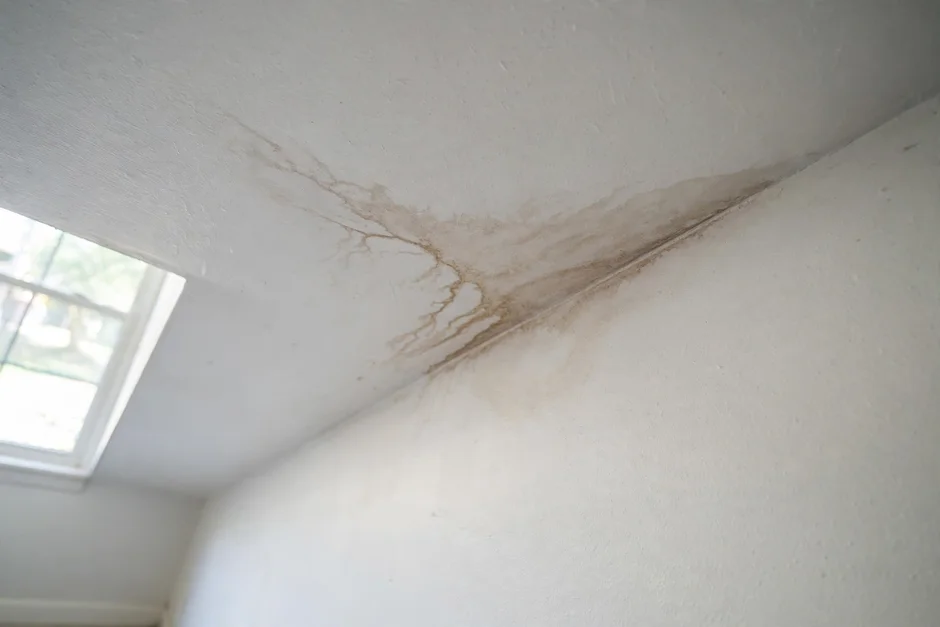
A spring storm can leave a stain over a bedroom, though nothing is visible from the ground. The entry point is often a cracked pipe boot on the slope above — found only by checking from the attic side.
What we do: trace the stain in the attic to the boot, replace the boot and the shingles around it, check the deck underneath, and confirm the entry point before we close up.
Book this service →
A stain appearing on a thaw in February with no rain at all, near a bathroom wall, may be a burst attic supply line, not the roof.
What we do: an honest triage. We tell you it is plumbing, show you the attic evidence, and point you to a plumber, instead of selling a roof repair for a pipe problem.
Book this service →A stain under a valley, worse after heavy rain, can mean the valley is dammed with live-oak leaves and water is backing under the edge.
What we do: clear the valley by hand, check the membrane underneath, replace the damaged flashing at the valley end, and clear the gutter outlets so the water sheds.
Book this service →Most leaks announce themselves long before the ceiling stains — a damp smell in the attic, a boot that has gone brittle, a valley dammed with live-oak leaves. Below are the leaks we are called out for most, and the damage they do when they are ignored.
Ask a pro →We trace a leak in the attic with a moisture meter instead of patching the ceiling. A stain is a symptom; the repair has to land on the entry point.
Water on a thaw with no rain is usually a burst attic pipe. We check the plumbing first and say so when that is what we find.
Live-oak debris dams valleys and backs water under the edge. We clear valleys by hand and check the membrane underneath.
We tell you what to watch after the next rain, so a repair that did not hold is caught early instead of becoming a soft deck.
“Found their ad on marketplace, super quick feed back. Gentlemen stopped by same day to inspect roof. This company is extremely professional and quick. They had our roof done in 2 days. Great price point and easy to work with. Thank you Juarez Contracting.”
Alethia VelazquezGoogle review
“Chris was professional, on time for the estimate, very informative about what needed to be done,and willing to work with me. Thank you for a job well done.”
Belinda SalinasGoogle review
“Very fast estimate and fixed within 24 hours of asking them for help. Very fast and very reliable. My roof looks great!”
Jamie KGoogle review
Usually a flashing or boot failure, a valley dammed with live-oak debris, or an attic pipe that burst after a freeze. The stain shows where the water lands, not where it enters — so we check the attic side with a moisture meter and find the entry point before any repair is quoted.
From the attic side first, with a moisture meter, then on the roof slope by slope above the stain. We photograph the entry point and the water path, so you can see what failed before we fix it.
Usually not. After a hard freeze, most sudden leaks are burst attic supply lines. Water that appears on a thaw with no rain, near bathroom or kitchen walls, is plumbing. Winter Storm Uri in February 2021 kept San Antonio below freezing for about 108 hours, and burst pipes were the commonest roof-adjacent damage.
We do not publish prices, because the scope depends on the cause, the slope and the material. After the inspection you get a written scope with the repair priced, and an honest note if replacement makes more sense.
Call (254) 329-0299 during business hours and we will trace the stain to its source, then fix it there.
Call (254) 329-0299 →Call us at (254) 329-0299 or send an email. We answer the phone during business hours and return after-hours messages first thing the next business morning. Leak visits are by appointment.