CoA application first
We work through the Certificate of Appropriateness process before any work starts, so the roof is not torn off before the approval exists.
San Antonio has 32 locally designated historic districts, from King William and Monte Vista to Dignowity Hill and Tobin Hill, and every one of them carries the same rule: exterior work, including roofing, needs a Certificate of Appropriateness from the Office of Historic Preservation, in addition to the building permit. In-kind replacement is usually approved at staff level. A material or profile change goes to the Historic and Design Review Commission at a public hearing. The approval comes first. The roof comes second.
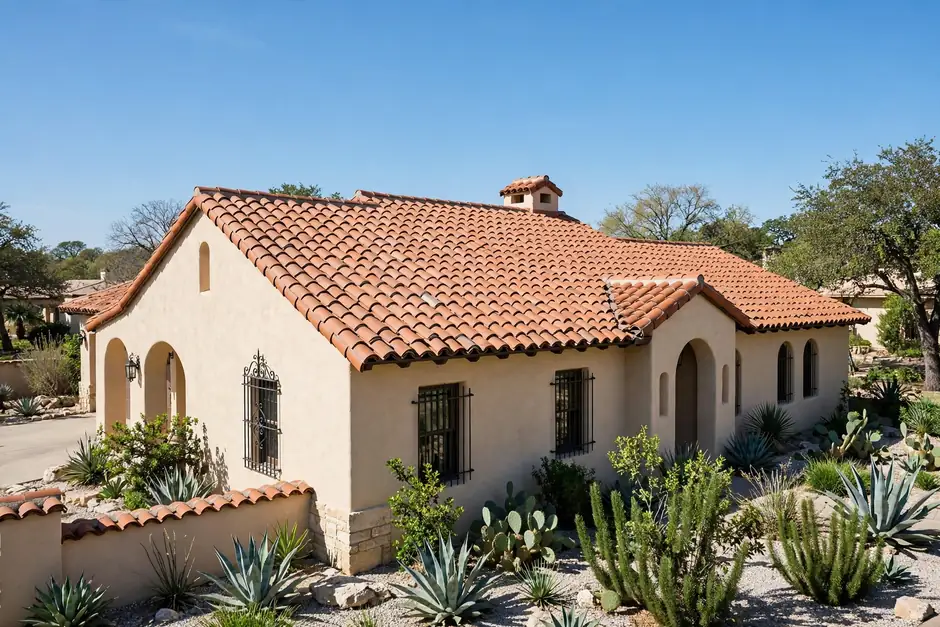
The Certificate of Appropriateness is the operative requirement. The Office of Historic Preservation reviews exterior modifications and repairs for historic districts, individual landmarks and eligible properties, and a CoA is required in addition to the City re-roof permit, not instead of it. Office staff approve most requests administratively. New construction, additions, alterations and work that does not follow the Historic Design Guidelines go to the Historic and Design Review Commission at a public hearing. Allow a two to four week buffer for the process, and longer if a hearing is needed.
The guidelines themselves are specific about roofs. Replacement in kind is preferred whenever possible. The original shape, line, pitch and overhang are preserved when replacement is necessary. Distinctive features, cornices, parapets, dormers, open eaves with exposed rafters, decorative rafter tails, are preserved and repaired. Where in-kind is not possible, new materials match the original in scale, colour, texture, profile and style. And the guidelines say to consider replacement when more than 25 to 30 percent of the roof area is damaged, or 25 to 30 percent of the tiles or shingles are missing or damaged. That is a historic-district guideline, not a citywide code rule.
Historic roofing is process work with a roof on top. On every district job we handle the items below.
We work through the Certificate of Appropriateness process before any work starts, so the roof is not torn off before the approval exists.
Replacement in kind is preferred and is usually approved at staff level. We document the existing material, profile and colour for the application.
Sound original tile is kept, and salvaged tile is re-used on the roof forms most visible from the public right of way, following the guidelines' own practice.
The original shape, line, pitch and overhang are preserved when replacement is necessary, with distinctive features repaired, not removed.
A material or profile change goes to the Historic and Design Review Commission at a public hearing. We prepare the documentation the commission needs to see.
The City re-roof permit is prepared alongside the CoA, and the job ends with the City's final building inspection.
We confirm your address is inside one of the 32 local historic districts and which guidelines apply to your roof.
We document the existing roof slope by slope: material, profile, colour, tile condition and underlayment age, with photos for the application.
The Certificate of Appropriateness application is prepared with the documentation the Office of Historic Preservation needs, and submitted before any work is scheduled.
Staff-level approval usually comes within the two to four week buffer. A material or profile change goes to the commission hearing, and we plan for the longer wait.
The roof is repaired or replaced as approved, with tile salvaged to the street-facing slopes and the finished work walked through with you.
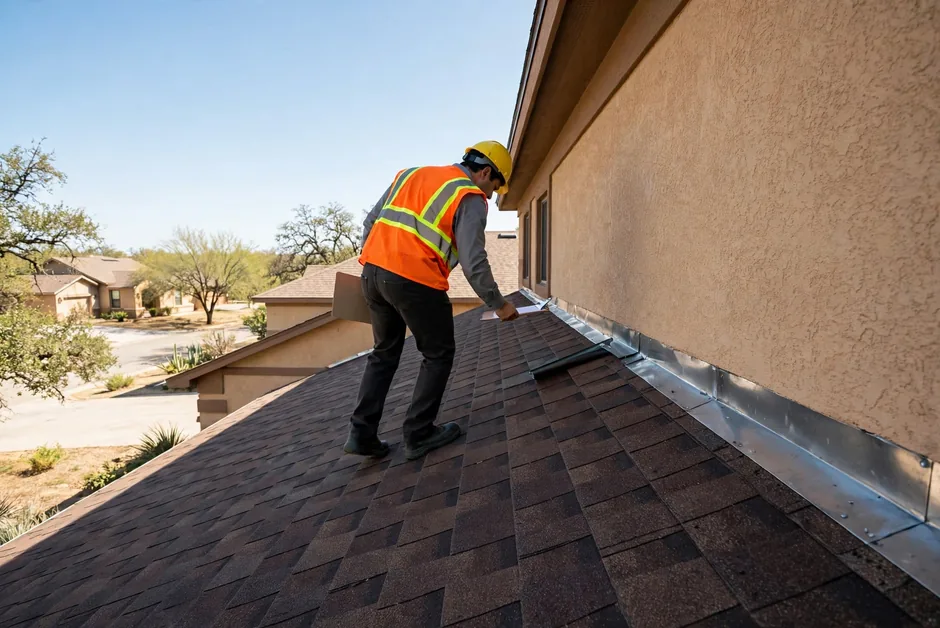
We confirm your address is inside one of the 32 local historic districts and which guidelines apply to your roof.
The existing roof is documented slope by slope for the CoA application, so the approval is based on evidence, not description.
Lifts tiles without breaking the sound ones around them, so a lift-and-relay keeps the original tile instead of destroying it.
Reads the underlayment's condition from the attic side, so the decision to lift and relay is based on evidence, not a guess.
Snaps straight reference lines for tile and shingle courses, so the replacement matches the original profile and line.
Fall protection on every pitch. Historic-core roofs are often steep and complex, and more dangerous to walk than a modern tract roof.
Sound original tile is sorted and stored during the work, so it is relayed on the street-facing slopes and not broken by foot traffic.
Original clay tile with failed underlayment in a historic district is a lift-and-relay job, not a new roof.
What we do: a CoA application for a lift-and-relay, the original tile salvaged to the street-facing slopes, and the underlayment and flashing rebuilt underneath.
Book this service →A home in a historic district needing a shingle replacement usually needs it in kind, matching the original in scale, colour, texture, profile and style.
What we do: staff-level CoA for an in-kind replacement matching the original in scale, colour, texture, profile and style, then the install.
Book this service →
Changing from composition shingle to standing-seam metal is a material change that goes to the Historic and Design Review Commission.
What we do: a CoA application with the documentation the Historic and Design Review Commission needs, and a plan for the hearing wait before any work is scheduled.
Book this service →In a historic district the expensive mistakes happen before the work starts: a roof torn off with no approval in hand, a material change filed as like-for-like, original tile destroyed by a full replacement, or the 25 percent rule quoted as if it applied everywhere. These are the historic-district problems we see most, and what each one costs when it is not caught early.
Ask a pro →We work through the Certificate of Appropriateness process first. A CoA is required in addition to the building permit, not instead of it.
A shingle-to-metal change in a district is a discretionary commission decision, not a like-for-like swap. We prepare for the hearing instead of assuming approval.
We lift and relay sound original tile, with salvaged tile on the street-facing slopes, instead of quoting a full tile replacement for an underlayment problem.
The 25 to 30 percent figure is a historic-district guideline for considering replacement. It is not a citywide code rule and not an IRC rule, and we do not present it as one.
“Found their ad on marketplace, super quick feed back. Gentlemen stopped by same day to inspect roof. This company is extremely professional and quick. They had our roof done in 2 days. Great price point and easy to work with. Thank you Juarez Contracting.”
Alethia VelazquezGoogle review
“Chris was professional, on time for the estimate, very informative about what needed to be done,and willing to work with me. Thank you for a job well done.”
Belinda SalinasGoogle review
“Very fast estimate and fixed within 24 hours of asking them for help. Very fast and very reliable. My roof looks great!”
Jamie KGoogle review
The approval the Office of Historic Preservation requires for exterior work on a property with a historic zoning overlay, including roofing. It is required in addition to the City building permit, not instead of it.
Allow a two to four week buffer for staff-level approval of an in-kind replacement. A material or profile change goes to the Historic and Design Review Commission at a public hearing, and takes longer.
It is a discretionary decision. In-kind replacement is preferred and usually approved at staff level. A material or profile change, such as shingles to standing-seam metal, goes to the commission at a public hearing.
32 locally designated historic districts, ranging from the three-parcel Leon Springs district to the Mission Historic District, which runs about seven miles on the south side. They are distinct from the roughly 20 National Register districts, which carry no binding local design review on their own.
Call (254) 329-0299 during business hours and we will check your district, document the roof and start the CoA process before any work is scheduled.
Call (254) 329-0299 →Call us at (254) 329-0299 or send an email. We answer the phone during business hours and return after-hours messages first thing the next business morning. Historic-district consultations are by appointment.