Leak source found, not guessed
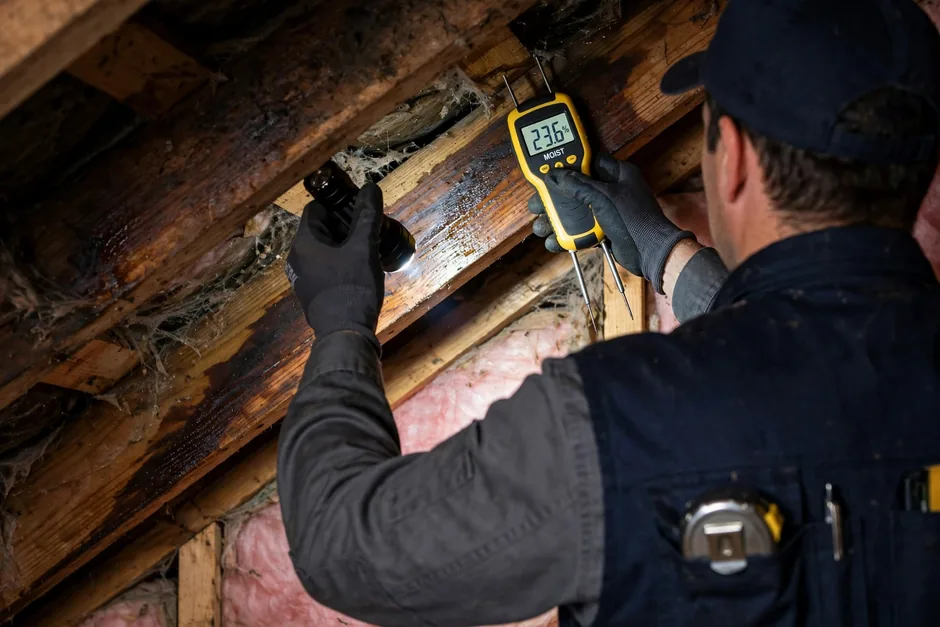
We trace the stain to its entry point on the roof, in the attic or at a flashing, using a moisture meter and a slope-by-slope look. Guessing costs you a second visit.
A ceiling stain is a symptom, not a diagnosis. In San Antonio it can mean a failed pipe boot, a cracked flashing, wind-lifted shingles, a valley full of live-oak leaves, or a burst attic pipe after a freeze, and each one gets a different repair. We triage the symptom first, find the cause on the roof or in the attic, and fix it at the source.
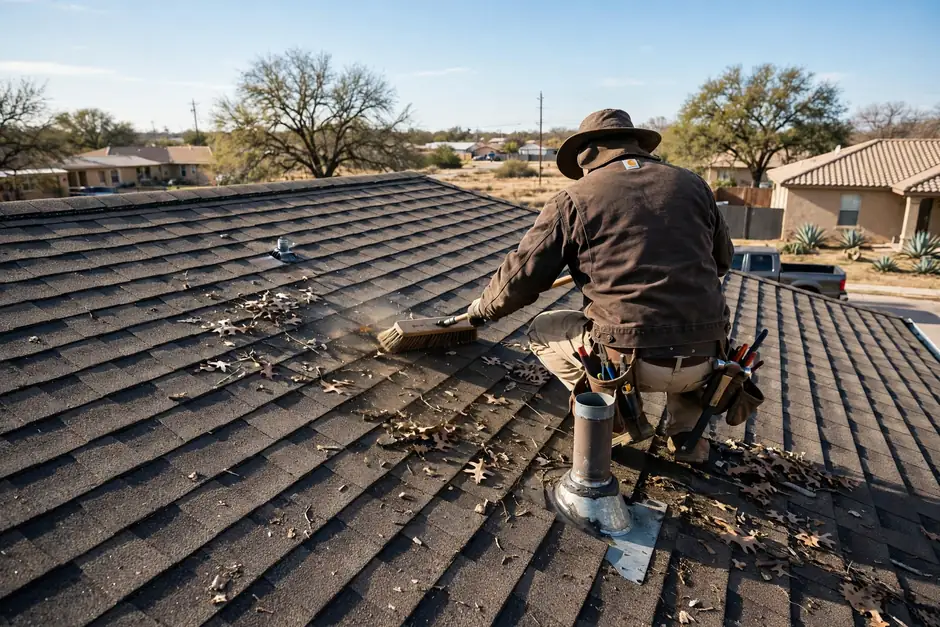
Every repair starts with the symptom. A stain under a valley points to the valley. A stain near a bathroom wall after a freeze points to a burst attic pipe, not the roof at all. Missing shingles after a storm point to wind lift and seal failure. Granule loss in the gutters points to a roof near the end of its life, where a patch is money spent twice. We check the roof and the attic side before we quote anything.
San Antonio roofs fail in patterns. Heat cooks shingle oils out, so south- and west-facing slopes age first. Spring hail bruises shingles and cracks tile. Live oaks drop leaves and catkins in late February and March, and that debris dams valleys and gutters until water backs under the edge. A repair that ignores the pattern comes back with the next storm, so we tell you when a repair is the right call and when replacement is the honest answer.
A repair is small work, but it still has to be done to the same standard as a replacement. Every repair call runs through the checks below.
We trace the stain to its entry point on the roof, in the attic or at a flashing, using a moisture meter and a slope-by-slope look. Guessing costs you a second visit.
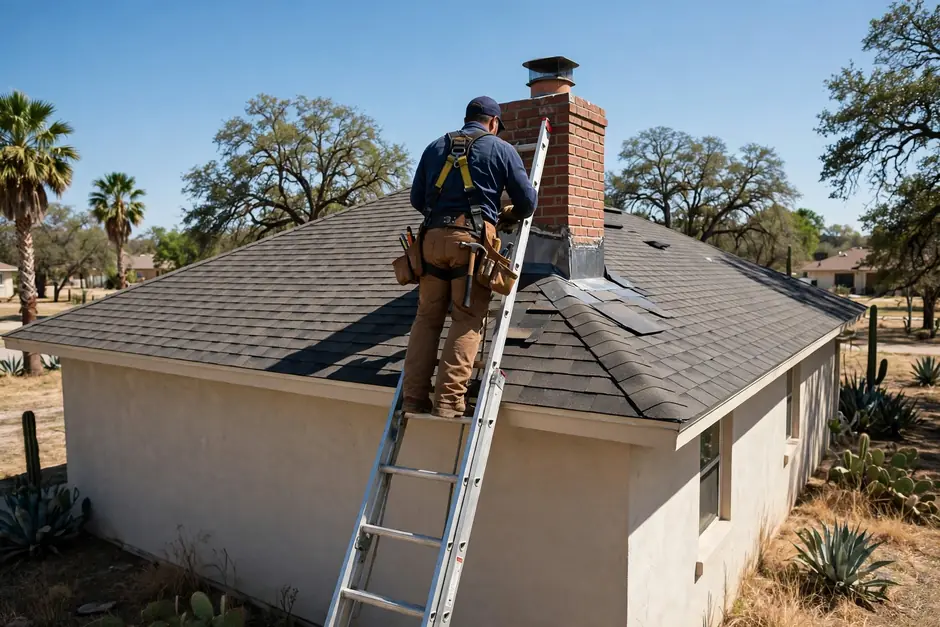
Step flashing, pipe boots and drip edge that are cracked, rusted or lifted get replaced, not smeared with sealant. Sealant over failed flashing is a temporary patch.
We match the existing shingle profile and colour as closely as the manufacturer allows. A repair that stands out is still a repair, but we aim for a blend.
Live-oak debris dams valleys and backs water under the edge. We clear the valley and the gutter at the repair so the fix is not undone by the next leaf fall.
A soft spot under the repair means the deck is wet or rotted. We show you what we find and replace the damaged sheeting before we close the repair up.
What failed, what we fixed, and what to watch for all go to you in writing. If the roof is near end of life, we say so instead of selling you another patch.
Tell us what you are seeing: where the stain is, when it appeared, whether it follows rain or a freeze. That tells us where to start looking.
We walk the roof slope by slope and check the attic side with a moisture meter, photographing the failed flashing, boot, shingle or valley.
You get a plain-language explanation of what failed and what the repair covers, with a price for the repair and an honest note if replacement makes more sense.
Failed flashing, boots or shingles are replaced, the valley or gutter is cleared, and the repair is sealed and checked against the next slope up.
We show you the repair, explain what to watch after the next rain, and note anything else we saw that will need attention in the coming year.
Tell us what you are seeing: where the stain is, when it appeared, whether it follows rain or a freeze. That tells us where to start looking.
Finds wet decking and the true entry point of a leak from the attic side, so the repair lands on the cause instead of the stain.
Lifts damaged shingles without tearing the sound ones around them, so a small repair stays small.
Cuts replacement shingles to fit valleys, hips and rake edges cleanly, so the repair blends with the existing roof.
Seals flashing joints and boot edges as a finishing step, never as a substitute for replacing failed flashing.
Fall protection on every pitch, even for a ten-minute repair. No one goes on a roof without it.
A quick sweep of the lawn and driveway after the repair, because nails from a small job do as much damage as nails from a big one.
A stain can appear over a bedroom after a spring storm, with no visible damage from the ground. The cause is often a cracked pipe boot on the slope above.
What we do: replace the boot and the shingles around it, check the deck underneath for softness, and trace the stain in the attic to confirm the entry point before we close up.
Book this service →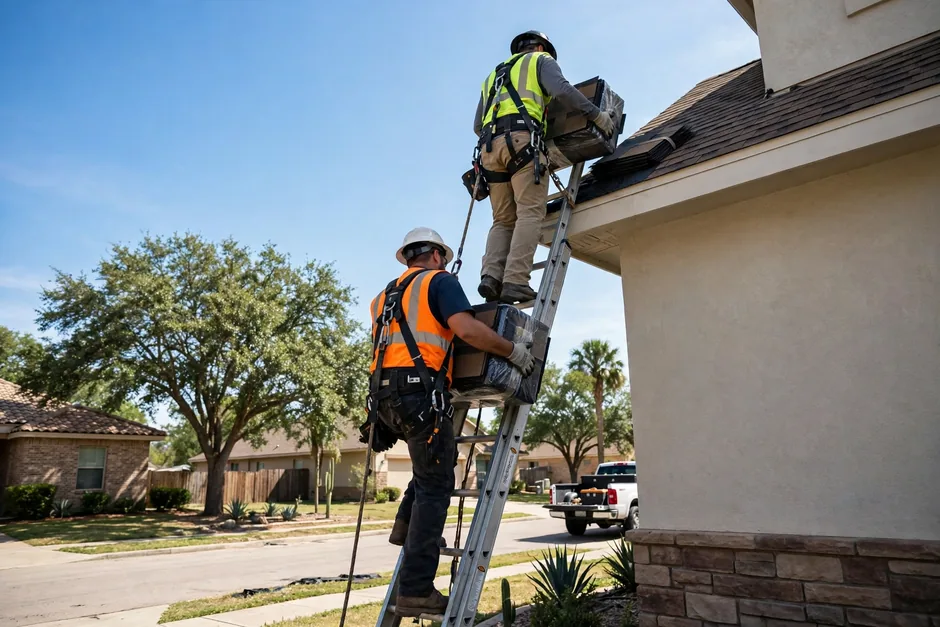
A wind event can lift a run of shingles on a slope, leaving the underlayment exposed to the next rain.
What we do: replace the lifted shingles, re-seal the courses above and below, and check the ridge cap and flashing on the same slope, since wind rarely damages only one spot.
Book this service →Gutters full of granules and curling shingles on the south slope of an ageing ranch, with a small leak at the valley, call for an honest repair-versus-replace read first.
What we do: an honest read first. On a roof this age, a valley patch is money spent twice, so we explain the replacement case and repair only the active leak if the homeowner needs time.
Book this service →Most repair calls start with a symptom, not a diagnosis: a ceiling stain with no known cause, shingles missing or blown off, granules collecting in the gutters, or a soft spot underfoot. These are the repair problems we see most, and what happens when each one is patched over instead of traced.
Ask a pro →We trace it in the attic with a moisture meter instead of patching the ceiling. A stain is a symptom; the repair has to land on the entry point.
We replace the missing shingles and re-seal the courses around them, and check the ridge and flashing on the same slope for wind damage.
Granules are a shingle's sunscreen. Once they shed, the bare asphalt ages fast. We tell you how much life is left and whether a repair is still worth it.
A sagging or soft spot means wet or rotted decking. We open it, replace the damaged sheeting and find the leak that caused it, instead of roofing over it.
“Found their ad on marketplace, super quick feed back. Gentlemen stopped by same day to inspect roof. This company is extremely professional and quick. They had our roof done in 2 days. Great price point and easy to work with. Thank you Juarez Contracting.”
Alethia VelazquezGoogle review
“Chris was professional, on time for the estimate, very informative about what needed to be done,and willing to work with me. Thank you for a job well done.”
Belinda SalinasGoogle review
“Very fast estimate and fixed within 24 hours of asking them for help. Very fast and very reliable. My roof looks great!”
Jamie KGoogle review
It depends on the cause, the slope and the material, so we do not publish prices. A failed pipe boot and a valley rebuild are different jobs. After the inspection you get a written scope with the repair priced, and an honest note if replacement makes more sense.
Often a flashing or boot failure, a valley dammed with live-oak debris, or a burst attic pipe after a freeze. The stain shows where water lands, not where it enters. We check the attic side with a moisture meter to find the entry point.
Yes, and the first step is triage. After a hard freeze, most sudden leaks are burst attic supply lines, not roof leaks. Water that appears on a thaw with no rain, near bathroom or kitchen walls, is plumbing. We say so when that is what we find.
When the roof is past its realistic life. An architectural shingle roof lasts 15 to 20 years in San Antonio heat. If the roof is past that and has had two leak repairs in a year, another patch is money spent twice, and we will tell you that.
Tell us the symptom and we will find the cause. Call (254) 329-0299 during business hours or request an inspection online.
Call (254) 329-0299 →Call us at (254) 329-0299 or send an email. We answer the phone during business hours and return after-hours messages first thing the next business morning. Inspections are by appointment and there is no obligation.